
The Department of Forests has taken part in the largest study to date combining bat genomes and fossils, published in the journal Nature, the Ministry of Agriculture, Rural Development and Environment has announced.
The department’s biodiversity officer, Charis Nikolaou, is among the authors of the research, which suggests bats most likely originated in Europe before spreading across the rest of the world.
The study also strengthens the scientific view that both flight and echolocation, the ability to navigate using sound and its echoes, appeared very early in bats’ evolutionary history.
The research was carried out under the international Bat1K consortium, which involved more than 130 researchers from universities and organisations in more than 30 countries.
The team analysed the genetic material of 103 bat species, covering all 21 recognised families, and drew on data from 44 extinct species through fossils. The scientists used the findings to revise the bat evolutionary tree and resolve questions that had gone unanswered for decades.
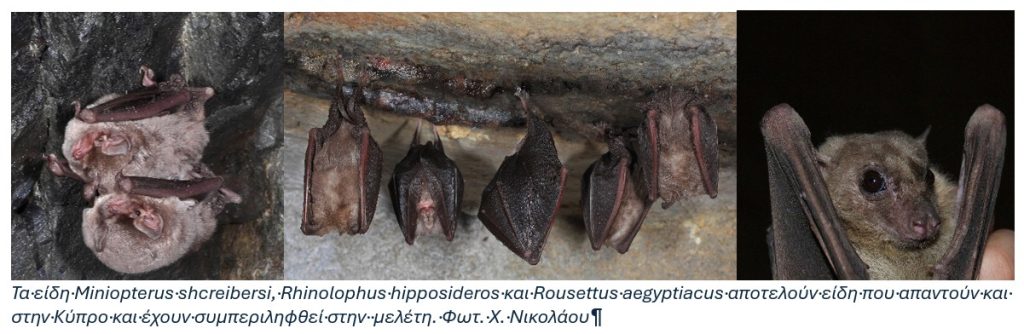
Three of the species included in the study, Miniopterus schreibersii, Rhinolophus hipposideros and Rousettus aegyptiacus, are found in Cyprus.
The ministry said the new genetic data also created a valuable resource for studying the traits linked to the remarkable longevity of some bats, and to the resilience of some species to serious diseases. Some species live far longer than expected for their size, while others can carry viruses without showing obvious symptoms of illness, with potential significance for human health.
Mr Nikolaou said the collaboration allowed field knowledge to be linked with findings from genetics and palaeontology. “For Cyprus, taking part in such efforts is an opportunity to contribute to international research and enrich the knowledge that underpins the protection of our own biodiversity,” he said.
Department director Dr Savvas Iezekiel said the natural heritage Cyprus is called on to protect was the result of millions of years of evolution. “By investing in science and international cooperation, we strengthen our ability to preserve it for future generations,” he said.
The paper, titled Reference genomes and fossils revise bat family phylogeny and biogeography, is the first phase of the global Bat1K programme, which aims to study the genetic material of all living bat species.