

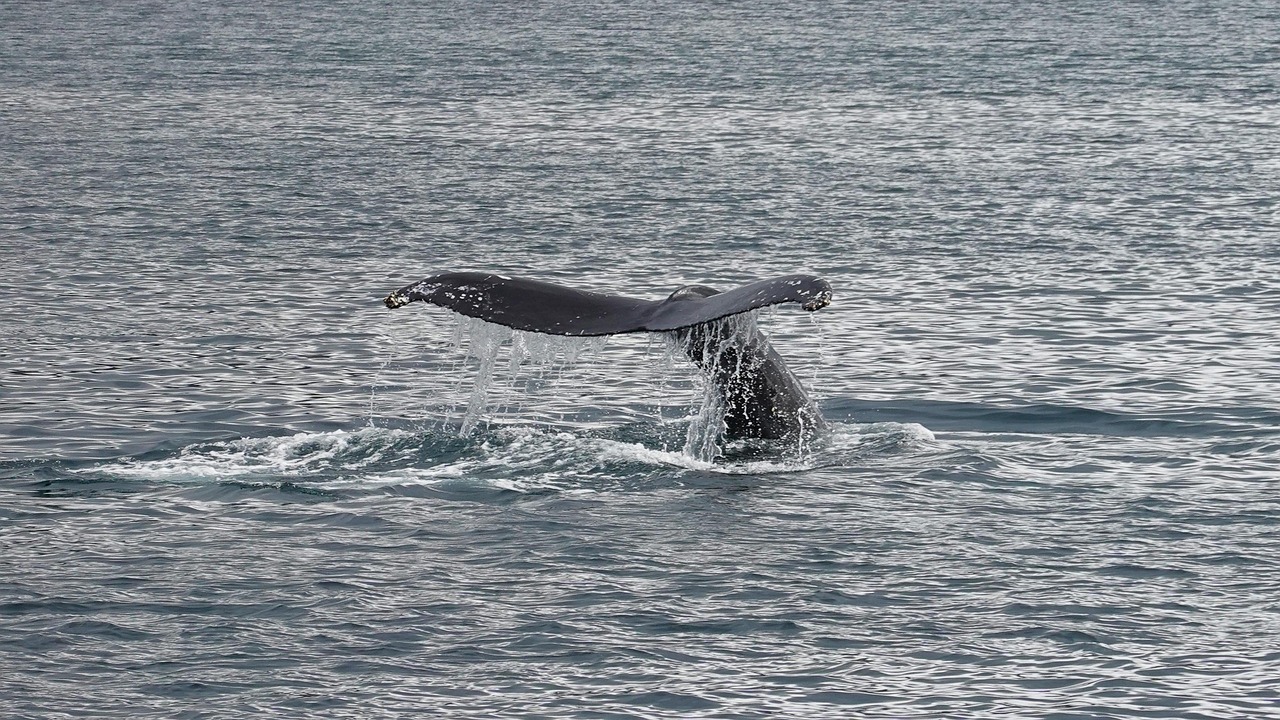
Whale watching in Iceland is an experience that borders on the mythical. Out in the cold expanse of the North Atlantic, where the air smells of salt and adventure, these colossal creatures rise from the depths, giving fortunate observers a fleeting but unforgettable glimpse into their world.
The journey begins in Húsavík, a sleepy fishing village that has built its reputation as Europe’s premier whale-watching destination. Here, traditional oak boats set out across Skjálfandi Bay, where humpback whales breach with theatrical elegance and minke whales glide through the water like silent phantoms. The largest of all, the blue whale, sometimes graces the area with its presence, reminding visitors that nature’s wonders are never far away.
Further south, Reykjavik’s Old Harbor offers another chance to spot these giants, with excursions navigating Faxaflói Bay. Here, pods of playful white-beaked dolphins often accompany boats, darting alongside them like mischievous guides. Occasionally, an orca—better known to many as the killer whale—emerges, its stark black-and-white frame cutting through the waves with precision.
The allure of Icelandic whale watching is not simply about sighting these majestic creatures—it is about understanding their rhythm, witnessing their grace, and respecting their space. Guides speak of conservation efforts, detailing how sustainable tourism plays a role in protecting the delicate balance of marine life.
In the end, a whale-watching trip is not just about ticking a box on an itinerary—it is about feeling humbled by nature. With luck, the sea delivers its grand spectacle, and for a moment, humans are mere observers in an oceanic ballet choreographed by forces far beyond our own.
Iceland, forever entwined with the wild and unpredictable elements of the North, reminds us that true adventure still exists—you just need to set sail and wait.