For years, Albania lingered on the fringes of Europe’s travel imagination — admired quietly by those who had discovered it, ignored by those who hadn’t.
But that era is ending fast. When a major British outlet like Saga places Albania at the top of its list of seven destinations to visit in 2026, it’s not just another travel recommendation.
It’s a sign of a shift that has been building for years: Albania is looking up, and the world is finally paying attention.
What’s striking is not simply that Albania made the list, but that it topped it. In a region crowded with polished Mediterranean heavyweights, Albania’s rise speaks to something deeper — a hunger among travelers for authenticity, affordability and unspoiled beauty.
And Albania, almost uniquely in Europe, still offers all three.
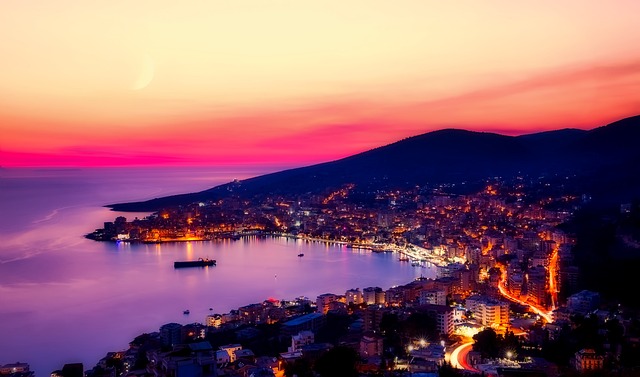
Saga’s description says it plainly: ancient palaces, crystal‑clear seas, undiscovered beaches and prices that haven’t yet caught up with the country’s growing fame.
It’s the kind of combination Croatia once boasted before mass tourism swept in and hotel rates doubled. The comparison is telling — Albania today feels like Croatia twenty years ago, but with a broader cultural palette and a far more accessible price tag.
Take Ksamil, with its turquoise waters that look lifted from the Caribbean. Or Berat, the “city of a thousand windows,” where Ottoman and Albanian architecture spill down the hillside in a way that feels almost theatrical.
And then there’s Tirana — loud, lively, unpredictable — a capital that has reinvented itself with color, energy and a kind of Balkan optimism that’s hard to resist.
These aren’t just pretty postcards. They’re proof of a country that has matured into a serious destination without losing the charm that made early visitors fall in love with it.
And the numbers back it up.
Tourism rose 5% in early 2025 compared with the previous year, a steady climb that shows no sign of slowing. Albania remains one of the cheapest countries in Europe — a rare distinction at a time when travel costs across the continent have soared.
Accommodation, food and transport remain accessible, even in peak season, making the country a magnet for travelers priced out of Italy, Greece or Spain.
But the real reason Albania is “looking up” is timing.
The country is still in that sweet spot — known, but not overrun. Beautiful, but not commercialized. Affordable, but not undervalued. It’s the moment every destination has once, just before the world arrives in full force.
Saga is right: 2026 is the year to go. Not because Albania is emerging, but because it has already arrived — and the rest of Europe is only now catching up.