
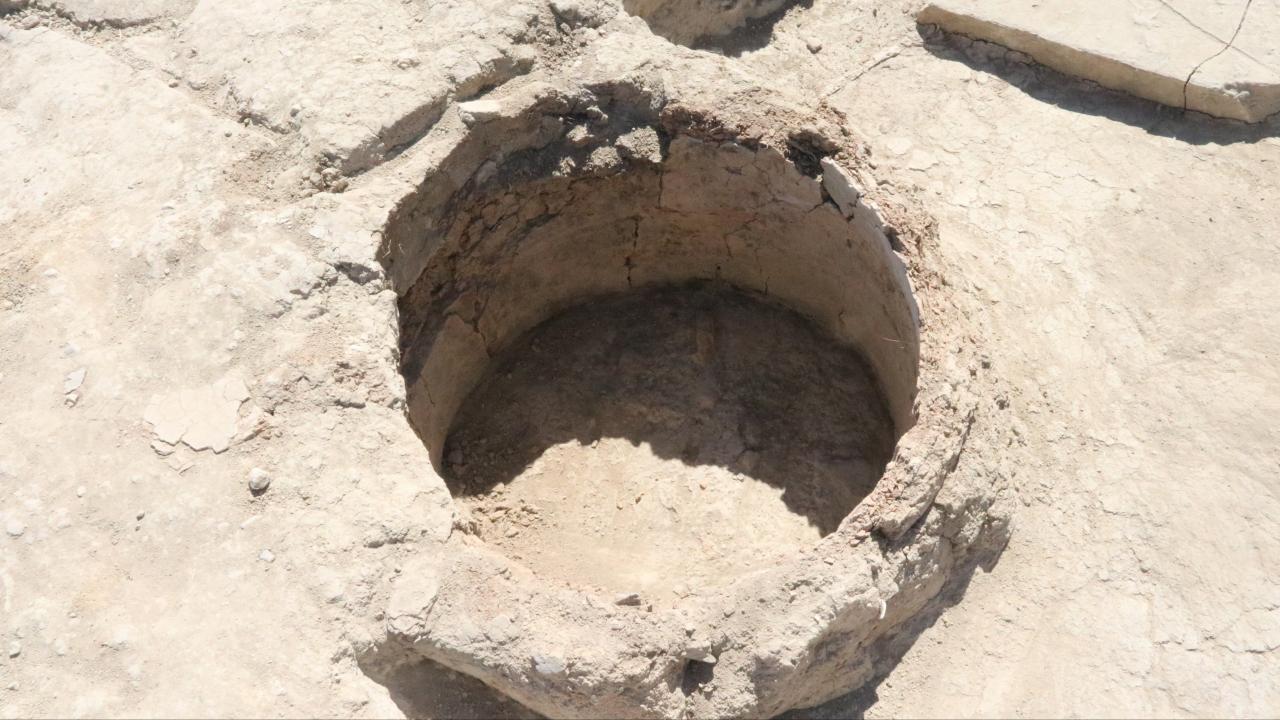
Archaeologists working at Arslantepe Mound have uncovered a 3,000-year-old underground oven believed to have been used for cooking meat, offering new insights into culinary practices during the Late Hittite period.
Excavation director Prof. Francesca Balossi Restelli said this year’s dig began in August and focused on the northern section of the site.
The team discovered a third oven-like structure beneath the surface, similar to two others found in 2022.
The installations were embedded below ground and featured clay hearth supports and large quantities of animal bones.
“These weren’t ordinary tandır ovens,” Restelli said. “They were designed not for baking bread, but for slow-cooking meat.” She compared the method to modern-day “kağıt kebabı,” a Turkish dish where meat is sealed and cooked for hours, sometimes overnight.
The newly discovered oven dates to between 1100 and 1000 B.C. Restelli emphasized the continuity between ancient and modern food culture in the region, noting striking similarities in cooking techniques and inviting local chefs to explore the site’s culinary heritage.
Arslantepe, a UNESCO World Heritage site, has long been a key location for understanding early state formation and daily life in Anatolia. The latest findings add food preparation to the picture, revealing how shared meals may have played a central role in community life.