
The European Commission on Wednesday approved two draft regulations to create a European Critical Communications System, known as EUCCS, that would let police, firefighters, paramedics and civil protection services communicate seamlessly across borders.
The first proposal, based on Article 87 of the Treaty on the Functioning of the European Union, covers law enforcement. The second, based on Article 196, extends the system to civil protection and other public safety bodies.
Home Affairs and Migration Commissioner Magnus Brunner and Executive Vice President Henna Virkkunen, who oversees technological sovereignty, security and democracy, said national emergency networks often stop at borders. Brunner cited this summer’s wildfires on the Belgian-German border, where firefighters’ radios stopped working once they crossed over, and a police chase on the Dutch-Belgian border last year, when the Maastricht control center could not immediately alert Belgian colleagues. The proposal says services now rely on improvised fixes such as physically swapping radios or using commercial phones.
EUCCS is designed as a “system of systems.” There will be no central data management infrastructure, and member states will keep ownership and operation of their national systems. They will be required to make them interoperable and connect them through a common infrastructure provided by the Commission. The regulation would also apply to non-EU members of the Schengen area. Denmark is not taking part in adopting the regulation and will decide within six months whether to incorporate it into national law.
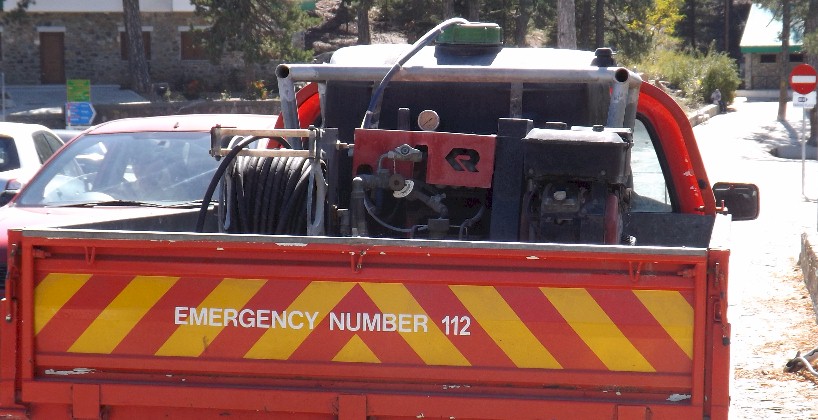
The proposal’s explanatory memorandum cites the recently inaugurated European firefighting hub based in Cyprus as an example of connectivity, communication and coordination tools.
Connection will take place in three stages, starting Dec. 1, 2030, 2033 and 2036, by which date all member states must be connected. Virkkunen said about 12 countries could begin in 2030, while the accompanying impact assessment projects eight to 10. Each country must be accredited before connecting, based on three maturity levels: basic, advanced and optimal.
Within three months of the regulation taking effect, each member state must designate a national authority, draw up a national strategy for moving from narrowband networks such as TETRA to broadband technology, and set up a security operations center. The proposal says EUCCS does not “replace” TETRA, which can continue as a backup, and includes no cutoff clause. Europol, Frontex and the European Customs Authority would have access to the system.
At the EU level, a Critical Communications Group with member state representatives and a System Accreditation Board will be established. The Commission will also create two “virtual” centers, one to monitor the network by 2030 and another to monitor security by 2029, using existing framework contracts rather than a new agency.
Asked by the Cyprus News Agency how the Commission can guarantee that a system relying on shared commercial networks, virtual centers and national systems fully connected only in 2036 can withstand hybrid threats, Virkkunen pointed to existing and developing legislation. She noted that the Digital Networks Act, approved in January, includes a new chapter on network security and resilience, as does a revision of the Cybersecurity Act.
The draft says member states must apply resilience and cybersecurity measures aligned with the NIS2 and CER directives and ensure critical communications are separated from commercial services. The separation can be physical, logical, technical or contractual and does not rule out shared networks.
Under congestion, providers must give priority and pre-emption rights to critical communications traffic. The Security Monitoring Center would collect reports and issue recommendations but would not handle incidents itself. The deadline for national centers to report critical incidents is set at 48 hours, in square brackets in the draft, meaning it has not been finalized.


