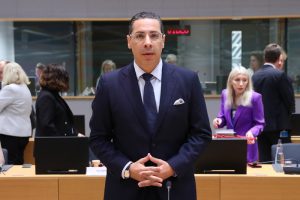
FAMAGUSTA GAZETTE – Deputy Minister of Migration and International Protection Dr. Nikolas A. Ioannides met with Sotiris Andreou, President of the South Staurovouni Complex and Community Leader of Menogeia to discuss the construction of two new migration facilities in the “Limnes” area.
The meeting launched a series of discussions with local leaders to address community concerns and provide updates on the projects.
Ioannides explained that the facilities, funded 90% by European resources, include a Reception Center for up to 1,000 asylum seekers, offering temporary accommodation until their applications are processed within one to three months.
This center aims to prevent urban ghettoization and associated issues.
The second facility, a closed Pre-Departure Center, will house around 800 individuals whose asylum applications were rejected or whose legal residence permits have expired, facilitating their repatriation.
Local concerns, particularly on safety and education, were raised by Andreou and MP Andreas Apostolou.
Ioannides committed to relaying these issues to relevant ministries and ensuring continued constructive dialogue with the communities to address their needs collaboratively.
RECENT PROTEST
Last month, residents from nine local communities held a peaceful protest against the operation of the planned Center in Menoyia.
Residents insist they are not opposed to the center’s construction but demand that it be a closed structure to ensure safety.
They voiced concerns about increased crime and safety issues if the center operates as planned.
The protest was attended by residents from Anglisides, Alamnino, Alethriko, Anafotida, Kivisili, Klavdia, Kofinou, Mazoto, and Mennogeia, as well as Members of Parliament from Larnaca and Famagusta.
MIGRANT ISSUE
Cyprus has been grappling with significant immigration challenges.
The country has experienced a substantial increase in asylum seekers and migrants, particularly from Syria, Lebanon, and other conflict-affected regions.
This influx has overwhelmed the existing infrastructure, leading to overcrowded reception centers and strained resources.
The situation has also sparked social tensions and concerns about safety and integration within local communities.