
By Nathan Morley in Reykjavik
Iceland has always been shaped by the sea. The waves have dictated its history, its economy, and its very survival.
And nowhere is this connection more vividly displayed than at the Reykjavík Maritime Museum, a place where the island’s deep ties to the ocean unfold through stories of fishermen, daring voyages, and the constant battle against the forces of nature.
Housed in a former fish factory by the harbor, the museum isn’t flashy or ostentatious—it doesn’t need to be.
Instead, it’s filled with artifacts that whisper of the past: navigation charts inked with uncertainty, rusting harpoons, and the remnants of boats that once braved Arctic storms. The air is tinged with salt and history.
Iceland’s fishing industry takes center stage, illustrating how communities along the coast relied on small boats and sheer resilience to carve a life out of the unforgiving North Atlantic.
You can almost hear the creak of wooden hulls, the shouted orders as men hauled in nets heavy with cod, and the quiet prayers offered to keep them safe from the unpredictable moods of the sea.
The exhibit dedicated to the Coast Guard is a compelling reminder of Iceland’s fight to protect its waters.
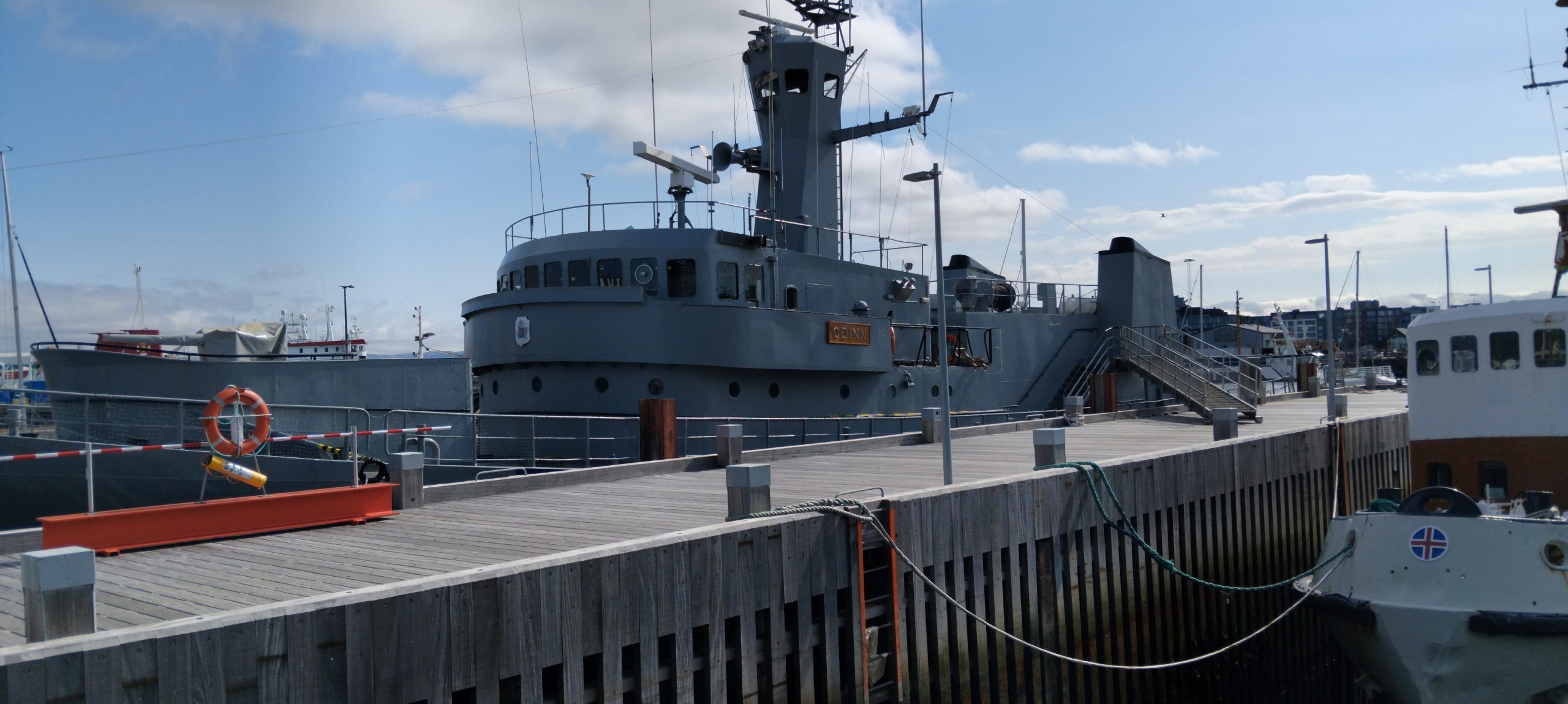
Step outside, and a true relic of the past awaits—the Odinn, a Coast Guard vessel that once roamed the treacherous seas, rescuing stranded sailors and navigating icy waters with steely purpose.
Walking its decks, you can imagine the tense moments, the urgent radio calls, and the raw power of the waves crashing against its hull.
Reykjavík’s Maritime Museum isn’t simply about boats, charts, or artifacts—it’s about survival, about a nation that has always looked toward the ocean with equal parts reverence and defiance.
It’s a place that reminds you that Iceland’s story isn’t just written on land, but etched into the currents, whispered by the wind, and carried across the tides.
For those who want to understand this island beyond its volcanoes and glaciers, this museum is the perfect place to start. After all, if you really want to know Iceland, you need to listen to the sea.