

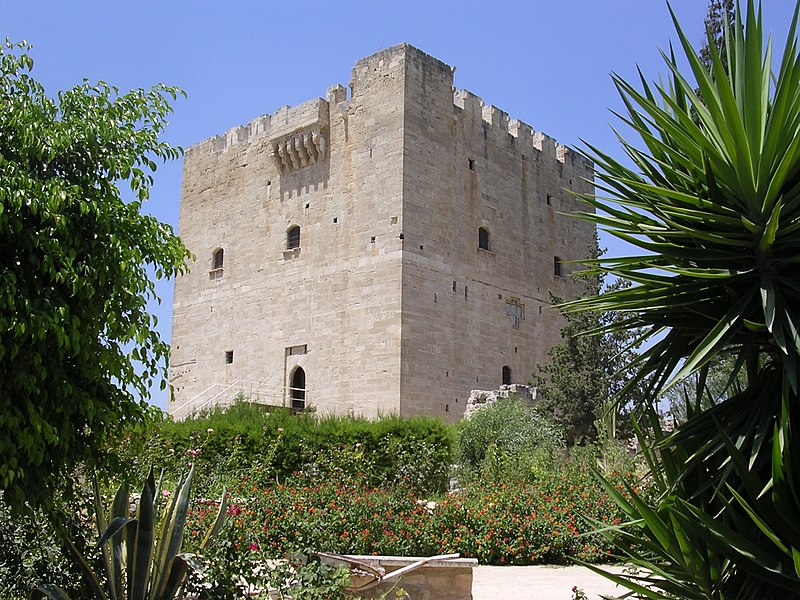
On the southwestern edge of Kolossi village, 14 kilometres west of Limassol, stands a fortress that once shaped the fortunes of medieval Cyprus. Kolossi Castle, a square keep of austere stone, was more than a military outpost — it was a centre of commerce, conflict and command.
The original structure is thought to have been built in 1210, when King Hugh I granted the land to the Knights of the Order of St John of Jerusalem. The Hospitallers, as they were known, established a stronghold that would become vital to the island’s sugar trade, processing cane grown in the surrounding fields into one of Cyprus’s chief exports.
But Kolossi’s history is marked by more than industry. In 1306, amid the factional disputes of the Crusader Kingdom, the castle was seized by the Knights Templar. Their tenure was brief: the order was dissolved in 1313, and the Hospitallers regained control.
The present castle dates to 1454, built under the command of Louis de Magnac. His coat of arms remains carved into the stone — a quiet assertion of authority in a period when such symbols mattered.
Today, the keep stands 21 metres high, its 17-by-17-metre footprint flanked by a rectangular bailey. It is a structure of symmetry and strength, its design as functional as it is imposing.
Kolossi’s legacy also flows through the vineyards. The region is known for Commandaria, a sweet wine with a lineage stretching back millennia. At his wedding feast in nearby Limassol, Richard the Lionheart is said to have called it “the wine of kings and the king of wines.” Whether apocryphal or not, the phrase has endured — as has the wine, named for the Grand Commandery of the Templars who once held sway here.
Kolossi Castle is not a relic of romance. It is a monument to power, production and the uneasy alliances of empire. Its stones do not whisper; they assert.