
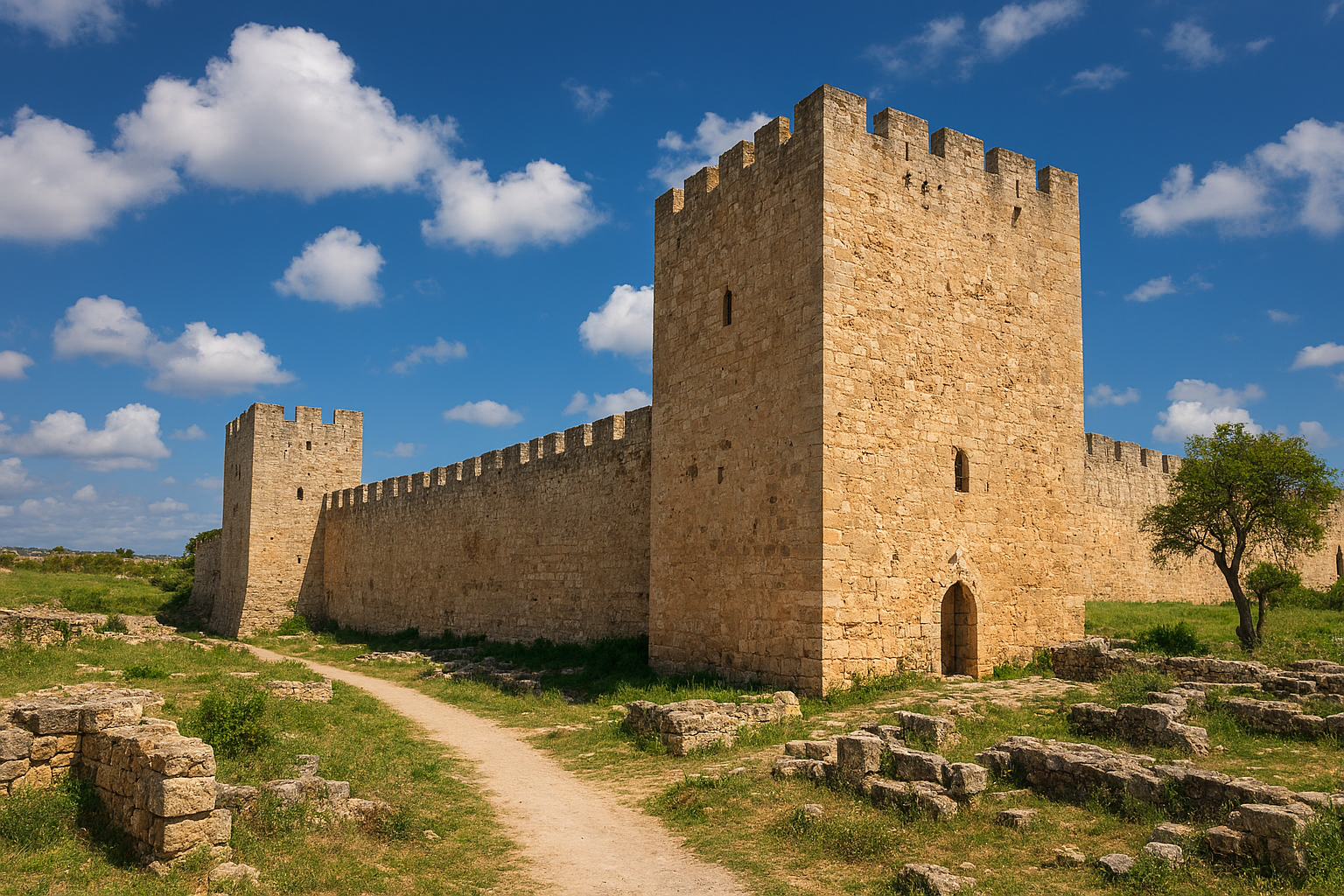
It was in the twilight of the 12th century that Guy de Lusignan, a dispossessed crusader and French-speaking noble, seized the island of Cyprus — a strategic gem abandoned by Richard the Lionheart and sold to Guy for a tidy sum.
Thus began a dynasty that would endure nearly three centuries, shaping the island’s fate with both grandeur and folly.
Guy, who died in 1194 and was interred at the Church of the Templars in Nicosia, was succeeded by his brother Amalric, a man of greater administrative acumen but no less entangled in the politics of the Levant.
Guy’s invitation to Christian families displaced from the Holy Land to settle in Cyprus was a calculated move — a demographic infusion of loyal subjects, but one that tethered the island’s economy to the unresolved conflicts of Jerusalem. The burden of these refugee lords and their ambitions strained Cyprus until the fall of Acre in 1291 finally severed the island’s entanglement with the mainland crusader states.
What followed was a century of opulence. Famagusta rose as a mercantile titan, its harbors teeming with Genoese and Venetian ships, its markets flush with Eastern luxuries. The Lusignan rulers, eager to project their legitimacy, embarked on architectural campaigns that transformed Byzantine fortresses into Gothic masterpieces.
The Church of Agia Sofia in Nicosia, Bellapais Abbey near Kyrenia, and Kolossi Castle near Limassol stood as testaments to their ambition and wealth.
The apex of Lusignan power came under King Peter I (r. 1359–1369), a warrior monarch whose campaigns abroad — notably the ill-fated Alexandrian Crusade of 1365 — were as bold as they were reckless.
Though he repelled Turkish piracy with ruthless efficiency, his overseas ventures drained the treasury and sowed dissent among his nobles. His assassination marked the beginning of the dynasty’s decline.
The vacuum of power invited foreign appetites. Genoa, ever the opportunist, seized Famagusta and held it for a century, bleeding the city of its former glory.
Venice, more calculating, maneuvered through marriage and diplomacy. James II (r. 1460–1473), the last Lusignan king, expelled the Genoese but sealed his dynasty’s fate by marrying Caterina Cornaro, a Venetian noblewoman. Upon his death, Caterina was compelled — under pressure from the Republic — to cede Cyprus to Venice in 1489, ending the Lusignan line and inaugurating a new chapter of colonial rule.