
FAMAGUSTA GAZETTE – In 1941, Cyprus stood at the edge of uncertainty, its fate hanging in the balance of a war that had already consumed much of Europe.
Adolf Hitler’s vision of conquest had turned its gaze toward the island, and for a brief, harrowing moment, invasion seemed inevitable.
In May that year, Cyprus became a chess piece in the great game between Britain and the Axis powers.
The Mediterranean, once a highway for British imperial might, was fast becoming an Axis sea.
The fall of Crete and the German alignment with Vichy France had crippled Britain’s lifeline to the Middle East.
Now, reports filtering into Nicosia warned of German motorized infantry landing in nearby Latakia, Syria—just a stone’s throw away.
The British rulers of Cyprus had little faith in their defenses.
Prime Minister Winston Churchill insisted that a force of 1,500 men would be enough to deter an invasion, but officials on the ground knew better.
In an effort to bolster the island’s scant defenses, the Seventh Australian Division Cavalry Regiment was dispatched to Famagusta, arriving under the weight of expectation and looming catastrophe.
The Australians, though on alert for war, found their own way to cope with impending disaster.
Their first Regimental Bulletin gleefully reported their “grave short-term consequences” after venturing into Famagusta’s nightspots. Overindulgence in the local brew—Kommandaria—had sent even the most hardened soldiers staggering back to camp.
By morning, the same men nursing hangovers had begun to suspect they might soon be prisoners of war.
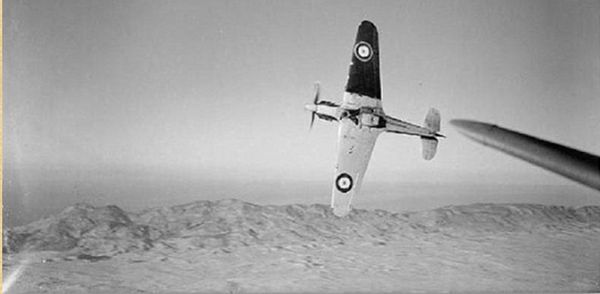
And then, air raids.
Throughout June, German and Italian bombers targeted Cyprus.
The mining port of Xero had already suffered under Italian air attacks the previous year, but now Famagusta, Larnaca, and Nicosia were subject to daily bombardment.
At sea, German U-boats laid mines off the coast, claiming the steamship Alliance and killing its captain and crew.
British authorities panicked. Women and children were ordered to evacuate immediately. Allied troops stationed on the island were put on alert for a retreat—a grim indication that Cyprus might soon be lost.
Yet, war is never predictable. Just as Hitler’s designs on Cyprus seemed certain, events elsewhere shifted the tide.
The airborne invasion of Crete had been costly beyond expectation, with the Germans suffering staggering casualties. The grand spectacle of paratroopers descending upon the island had proven to be a bloodbath, so much so that Hitler abandoned airborne operations entirely.
The feared invasion of Cyprus never came.
Historians may argue over the strategic importance of the island, whether its capture would have strengthened the Axis push toward the Middle East or altered the course of war in North Africa.
But for the people of Cyprus, such calculations were secondary. All they knew was that an enemy had been at the gate—and, miraculously, had turned back.
With war tumbling forward, the summer of 1941 faded into history, leaving only the stories behind.
Cyprus: My Cypriot grandfather was one of millions of foreign servicemen who fought for Britain. Now I’m telling their stories
The second world war veteran community is far more ethnically diverse than many people realise, with over 3 million foreign servicemen serving with the British armed forces during the conflict.
Second world war memoirs are vital records of how these servicemen remembered the war. They offer insights into their relationship to trauma and resilience and their search for meaning in life. READ MORE>>>