
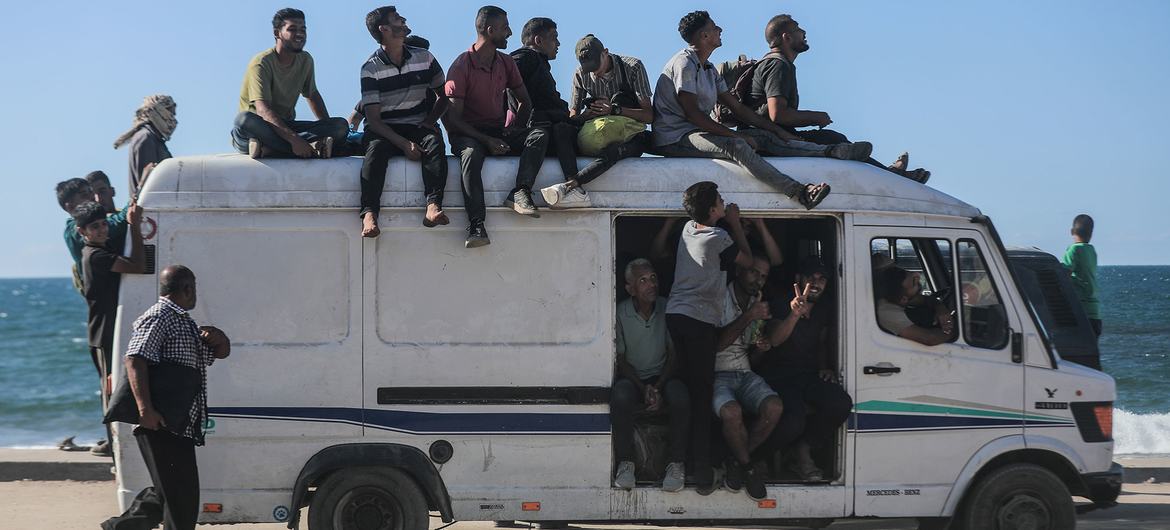
As a fragile ceasefire continues in the Gaza Strip, United Nations aid agencies are intensifying efforts to deliver critical humanitarian assistance, with officials warning that delays could deepen the crisis.
UN Emergency Relief Coordinator Tom Fletcher traveled this week from Cairo to the Rafah border crossing in southern Gaza, calling it a “vital lifeline for food, medicine, tents and other lifesaving aid.”
Fletcher emphasized the importance of international cooperation and said he remains in close contact with the White House, “who are determined that we are allowed to deliver at scale.”
Despite the ceasefire between Israel and Hamas, the UN Relief and Works Agency for Palestine Refugees (UNRWA) said Israeli authorities continue to block the entry of aid. The agency reported having enough food stockpiled outside Gaza to support the population for three months.
UNRWA spokesperson Adnan Abu Hasna told UN News that the agency’s extensive distribution network makes it essential to the relief effort. “If Israel continues to exclude us, it would mean a loss of people’s trust,” he said.
“There is absolutely no justification for Israel not allowing this massive amount of aid — which cost tens of millions of dollars — into the country,” Abu Hasna added.
UNRWA still has about 12,000 staff working inside Gaza, including 8,000 teachers supporting 640,000 students after two years of disrupted education.
The agency has also provided nearly 800,000 psychological support consultations. However, 90% of its facilities have been destroyed and 370 staff members have been killed.
“The only thing that has changed for us is our inability to distribute food, even though we have the logistical capabilities,” Abu Hasna said.
Meanwhile, the UN Children’s Fund (UNICEF) reported that more than 1,300 truckloads of life-saving supplies are ready for delivery, underscoring the scale of the ongoing humanitarian need.