By Tallis Reeve
Brussels doesn’t shout about its past—it lets history speak in quiet reverence, preserved behind grand facades and cobbled streets.
But step inside the Royal Museum of the Armed Forces and Military History, and you’ll find yourself surrounded by the ghosts of war, the weight of history pressed into every artifact, every uniform, every battered engine of destruction.
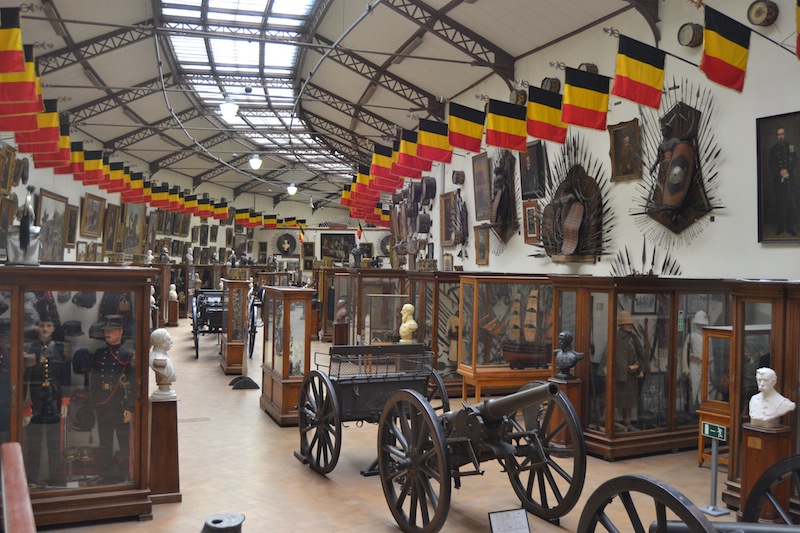
This is no sterile archive of dusty relics. It is a living, breathing chronicle of conflict, laid out across vast halls with an unapologetic honesty. The journey begins with medieval suits of armor, battered by the fury of long-forgotten battles.
Swords and muskets glint under soft lighting, telling stories of skirmishes fought with grit and desperation.
Move forward, and the Napoleonic campaigns unfold through intricate maps, rapiers, and letters penned by men destined never to see home again.
But it is the 20th century that grips the visitor hardest.
The First World War section is oppressive in its detail—mud-caked helmets, trench tools, the faded remains of letters written by soldiers who clung to the hope that someone would read them. A reconstructed bunker reminds you how war strips humanity down to the essentials—survival, camaraderie, fear.
Then comes the Second World War, where shadows lengthen and horrors deepen.
A German Enigma machine sits in a glass case, its cold metal keys a reminder of secret battles fought in code. The wreckage of downed aircraft hangs overhead, frozen mid-plunge, whispering the final moments of their pilots. Photographs stare out from displays, capturing the faces of men who charged into history, never knowing if they would make it out the other side.
Outside, a vast collection of military aircraft spans decades of innovation and destruction.
Fighter planes from every era rest under the Brussels sky, each bearing scars from battles fought in distant lands. You run your hand along the metal of a Cold War jet, feeling the weight of conflict still lingering in its frame.
There is no glamour in this museum, no sanitized version of history.
War is presented in its rawest form—its machinery, its strategies, but above all, its human cost. Brussels does not romanticize war.
It remembers it, honors it, and makes sure we never forget.
And as you step back into the quiet streets, the echoes follow you, lingering long after you’ve left.