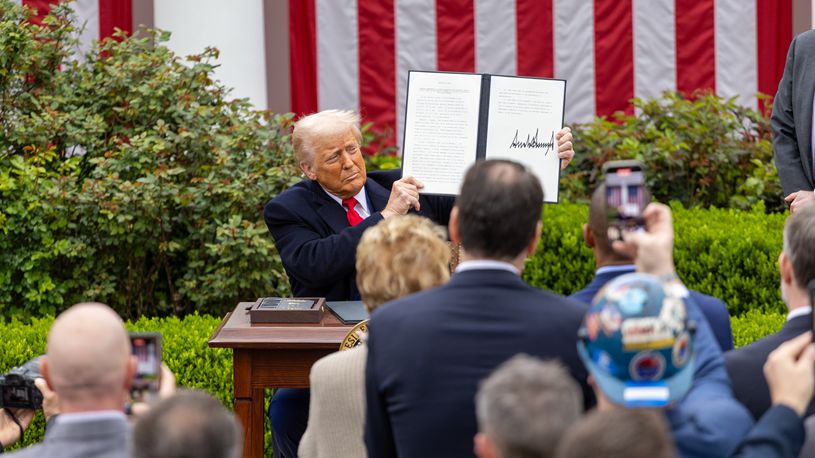
Few things in politics are as precarious as staking a strong position and then retreating under pressure.
Many would argue that this is precisely the predicament President Donald Trump finds himself in, as his administration’s bold tariffs have triggered global turmoil—only to be followed by adjustments that some interpret as a climbdown.
When bold rhetoric gives way to concessions, it inevitably opens the door to criticism and questions of credibility.
Trump’s tariffs, initially championed as a courageous move to protect American manufacturing and reset trade relations, quickly made waves in the global economy.
Stock markets dipped sharply, allies voiced outrage, and retaliatory measures further destabilized international trade.
These effects created a cascading sense of unease, pushing his administration toward recalibration, including a pause on higher tariffs for most nations. While his stance on tariffs against China remains resolute, the broader adjustments feel like concessions in the face of mounting pressure.
Critics view this as a loss of face, particularly given Trump’s unyielding rhetoric when announcing the tariffs.
The need for a re-evaluation highlights the inherent risks in attempting to reshape global economic dynamics with a single sweeping policy. Yet, this backtracking also underscores a central truth about diplomacy: rigidity rarely triumphs in the face of complexity.
The global economy is an intricate web of interdependencies, where trade policies reverberate across borders and industries.
Decisions of this magnitude demand foresight and flexibility, traits that sometimes clash with bold political declarations.
Trump’s initial confidence in the tariffs may have been a misjudgment of the intricate balance required to navigate international relations. His administration’s adjustments, though criticized, reflect the immense pressure of balancing domestic interests with global realities.
The humiliation of retreating from such a prominent policy is undeniable for some. However, it also offers lessons in pragmatism and adaptability. Leaders who champion bold policies must anticipate potential pitfalls and remain prepared to recalibrate when reality defies ambition.
Ultimately, Trump’s tariff saga highlights the high stakes of global trade policy.
The complexities of international economics leave little room for oversimplified solutions. Whether viewed as a misstep or a necessary adjustment, the tariffs’ fallout illustrates the balancing act between bold leadership and responsible diplomacy in a world where no action exists in isolation.