
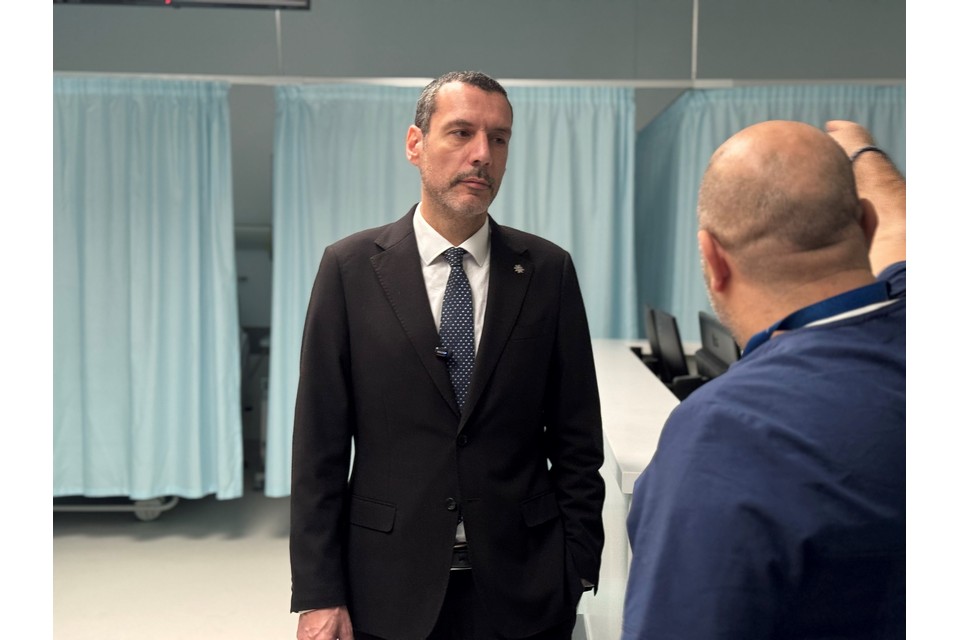
Neophytos Charalambides tells European Parliament event that patients must be properly informed of their rights to seek treatment abroad
Cross-border healthcare is not an abstract European policy debate for Cyprus but a matter of direct concern to patients and families forced to seek treatment abroad at difficult moments in their lives, the country’s health minister has said.
Speaking at an event hosted by the European Parliament’s office in Cyprus on patients’ rights and cross-border care, Neophytos Charalambides said that while such arrangements might simply widen the range of options available to a larger country, for a small island state like Cyprus they were, in certain cases, a necessary part of ensuring patients received the treatment they needed.
Charalambides said Cyprus’s health system was continuing to develop and expand, but acknowledged it was simply not realistic for every highly specialised treatment for every possible condition to be available domestically. This was particularly true, he said, for rare diseases or treatments offered at only a limited number of specialist centres worldwide.
Access to treatment abroad, he stressed, did not replace the national health system but complemented it in cases where a patient’s needs exceeded what a small country could reasonably be expected to provide. He said this possibility rested on the EU’s framework for coordinating social security systems and cross-border healthcare, but argued that behind the regulations, directives and procedures there was always a real, individual case: someone waiting to find out where they could be treated, under what conditions, and how soon.
It was not enough, he argued, for a right to simply exist in law — citizens needed to know they had it, and to understand what steps they had to take to exercise it, including being informed in good time about available options, the possibility of prior authorisation, cost coverage and who to contact. He said the state’s responsibility therefore extended beyond creating mechanisms, to making sure they were understandable and accessible to citizens, a role played in Cyprus by the National Contact Point for Cross-Border Healthcare.
New possibilities were also emerging through technology, he added, citing the cross-border use of electronic prescriptions and secure, patient-consented access to key health information as tools that could significantly ease care for Cypriots while abroad elsewhere in Europe.
But he cautioned that progress should not be measured only by how many services existed, but by how easily patients could actually use them, warning that a procedure could be institutionally sound while still proving slow, difficult or confusing for someone facing a serious diagnosis. For that reason, he said, it was essential to listen to patients’ own experiences in order to identify where they encountered obstacles and improve how procedures worked in practice.
Charalambides concluded that cross-border care illustrated in a very concrete way what European cooperation could offer: complementing national health systems and opening routes for patients that might not otherwise exist. The real test, he said, was whether such mechanisms genuinely worked for the patient — whether, at the moment of need, citizens were not left alone to navigate the system, but knew what options they had, who to turn to, and how to access the right treatment.