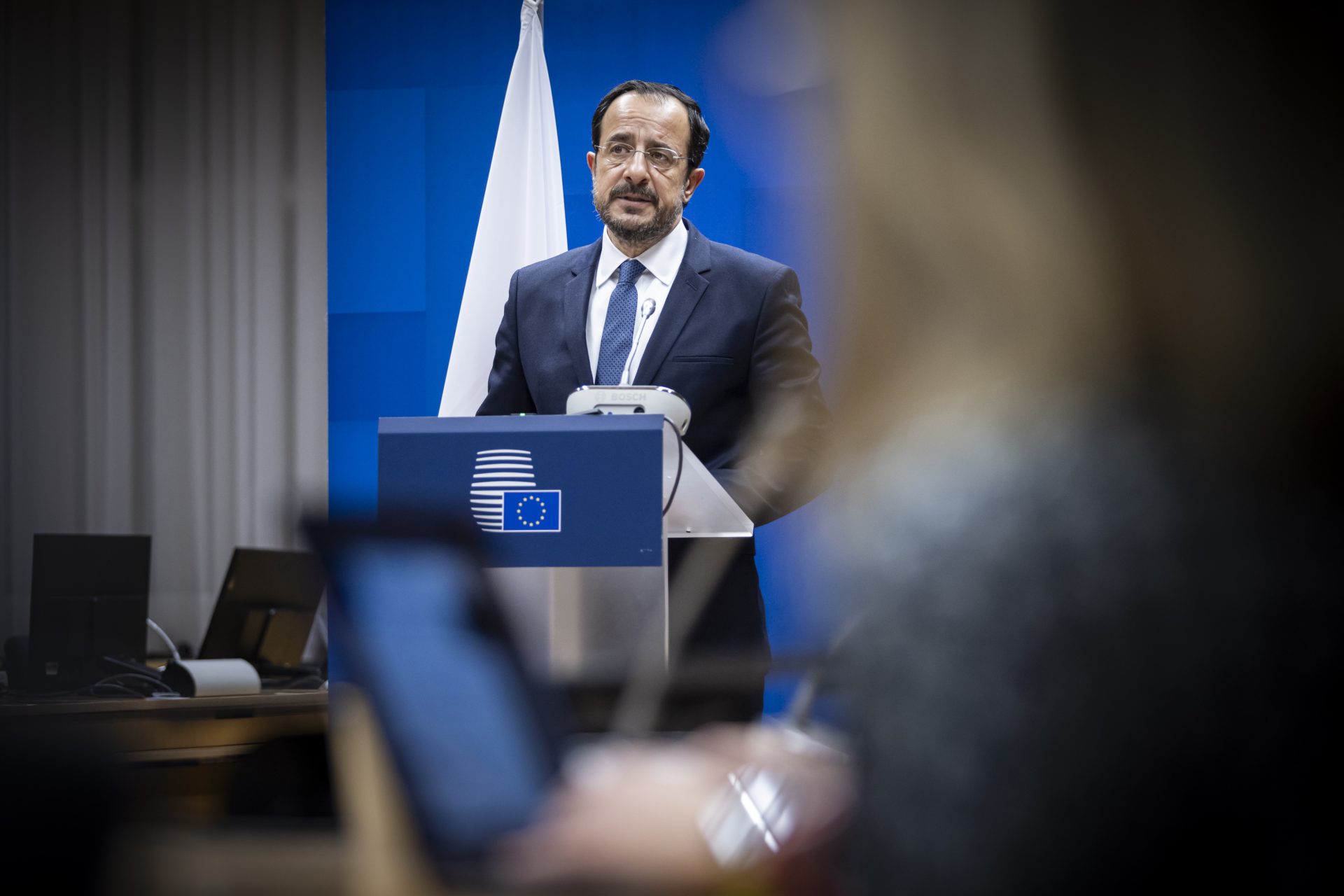
Cyprus’ upcoming presidency of the Council of the European Union will place strategic autonomy at the center of its agenda, President Nikos Christodoulides said Thursday after a European Council summit in Brussels.
Christodoulides said the presidency begins “at a decisive and difficult moment,” with the EU facing debates over the long‑term budget, competitiveness, Ukraine, defense, security, enlargement and migration.
He said Cyprus aims not only to manage these files but to “find solutions that advance European integration.”
He named three core priorities for the presidency: strengthening EU strategic autonomy; deepening institutional ties with countries in the wider Middle East; and delivering “credible, lasting answers” to issues affecting citizens’ daily lives, including housing, energy costs, child protection online, health and education.
Christodoulides said Cyprus is uniquely positioned to lead EU engagement with the Middle East, citing its geography and strong bilateral relations.
He welcomed European Commission President Ursula von der Leyen’s plan to visit the region immediately after attending the presidency’s launch in Cyprus on Jan. 7.
On enlargement, he highlighted summit conclusions calling for closer cooperation with Commissioner Johannes Hahn and references to the Cyprus issue, Turkey’s obligations and the fenced‑off area of Varosha. He said these points would be used in efforts to restart reunification talks.
Christodoulides also briefed leaders on his recent visit to Ukraine and concerns about sanctions evasion. He said EU leaders agreed on providing financial assistance to Kyiv through Commission borrowing, while discussions on using frozen Russian assets as guarantees will continue at the level of EU ambassadors.
He noted that three countries — the Czech Republic, Hungary and Slovakia — opted out of the guarantees mechanism but did not block the decision. About 70% of the funding will go to defense and security needs, he said, with safeguards on procurement sources.
On migration, Christodoulides pointed to a letter from the Commission noting Cyprus’ progress toward joining the Schengen area and identifying Cyprus, Austria and Germany as the member states with the highest number of returns to Syria.
Responding to comments by Turkish Foreign Minister Hakan Fidan, who accused Cyprus of obstructing EU‑Turkey relations, Christodoulides said the remarks were “unfortunate” and that no other leader raised Turkey’s accession process during the summit.
He said Cyprus would fulfill its institutional role during its presidency but expects “specific progress” from Ankara if it seeks to advance ties with the EU.
Christodoulides said Cyprus has held several bilateral meetings with EU leaders ahead of the presidency and is “fully prepared” for the six‑month term.