
Cyprus and Greece are blocking the lifting of European sanctions against Syria, reports Nicosia radio.
According to diplomatic sources, Nicosia and Athens wish to receive assurances that the sanctions that the European Union is ready to lift on the new Islamist regime that rules Syria can be easily replaced, if necessary. Read the story >>>
An ambitious European project to resolve Cyprus’ major water problem is in the final stages of evaluation by technocrats and experts from the European Union.
A fundamental principle of the European program for sound water management, Mining Water, is that Cyprus should be able to provide more water, in a more economical way than currently costly desalination. Read the story >>>
A total of 9,363 traffic violations were detected and logged during traffic checks carried out by members of the Police throughout Cyprus from the 3rd – 9th February.
Police officers filed 4,720 complaints regarding exceeding the speed limit, 138 complaints for failure to use seat belts by drivers and passengers, 7 complaints for failure to use a protective helmet and 209 complaints for using a mobile phone while driving. Read the story >>>
Throughout her life, the “Damsel of Cyprus” (born circa 1177) was used as a political and diplomatic tool in the conflicts of men. She was the daughter of Isaac Komnenos, the emperor of Cyprus. Her own name was never recorded, although historians have suggested it may have been either Beatrice or Maria.
While the princess was often powerless, the small snippets of evidence that we have about her present the life of a young woman with the resolve and tenacity to survive and thrive. She’s one of the many women I’ve come across during my research into elite women’s experiences of confinement across 11th to 13th-century medieval Europe. Read the feature >>>
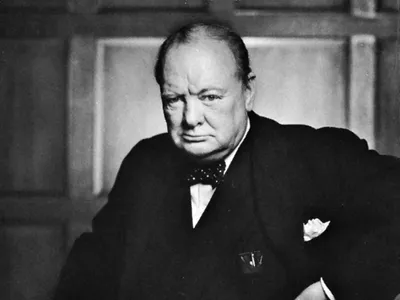
Winston Churchill visited Cyprus on a couple of notable occasions.
His first visit was in October 1907, when he was the Under Secretary of the Colonies. Want to know more? Read the article>>>
The village of Pyla is developed in a strategic location, controlling the passage that leads from the north-east coasts of Cyprus to the central plain of the island.
The name Pyla originates from the Greek word “πύλη”, meaning the entrance or the passage, and is conceptually linked with its geographical location. Read More>>>